Psalm 95 Mighty God of creation
John 4:5-42 Woman at the well
We’ve had a lot of hot days this summer! We are all told to ‘Stay hydrated’. Drink more water. It matters to have enough water. We carry around our water bottles. We appreciate a shower and keep chilled water in the fridge. Water is necessary for life.
About fifteen years ago, my husband Ron and I had the opportunity to visit South India. We were the guests of Church of South India and were there to visit some of the projects that Uniting Church in Australia was supporting through Uniting World. It was similar to the project for East Timor that we just saw on the video. In South India, we saw projects linked to Education, small business, recovery after the 2003 tsunami and other projects. One of many projects was for wells to provide water to some villages in the area south of Vellore in the south east. The wells needed to be very deep, but at last they now had a tap in their own village. So much joy.
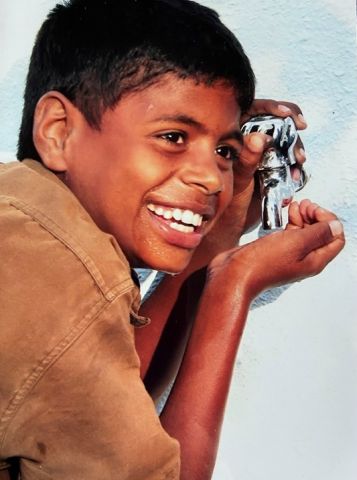
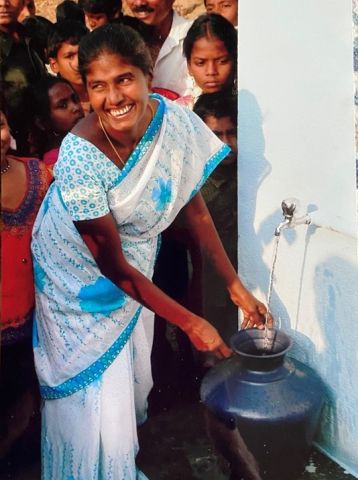
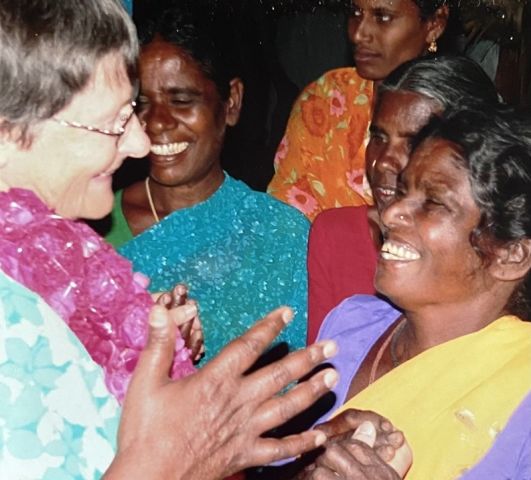
A tap and water, right in their own village. By the time we reached the last village it was already dark. Very few houses had electric light so the headlights of our vehicle were left on so we could see enough for the ceremony of turning on their tap.
As an older white woman, I was a very rare and exotic visitor. Through an interpreter, they told me what access to clean water would mean for them. In good seasons, it was only a walk of a couple of kilometers to carry their water pots to fill from irrigation channels. But in the dry season, they had to walk much further. There were times when wealthy landowners refused to let them walk across their land, so their daily trip to carry their water pot on their heads was even longer. Even then, the water was often polluted. To have a tap, with clean water, in their own village was a miracle for future health. We have just watched the video about Timor-Leste. They too have to struggle to get clean water for their daily needs. We have taps in our own houses. Let’s not take this gift for granted.
Tim Winton’s new book ‘Juice’ is set in a terrifying future where climate change and global warming has made life almost impossible. He writes, ‘Water became currency, then power itself.’
Tamara and Ruho have just read for us the story of the woman who met Jesus at a well. She had come with her jar to collect water for the day. Water was essential for her life.
To set the scene, let’s notice where this story happened. Jesus was walking on foot with his disciples from Jerusalem in the south to Galilee in the north. [pic of map]. To reach Lake Galilee in the north, they had to walk through the land of the people of Samaria. It was a very long way if you tried to detour around it. It was at least 125 km even going through Samaria.
These days when we talk about a Good Samaritan, we mean someone who is kind, generous and has been willing to help a stranger. We don’t understand the implications. To call someone a good Samaritan in the days of Jesus was like calling them a good alien, a good enemy. A politician recently asked whether there were any ‘good Muslims’ and was, rightly, rebuked for saying that. If we have grown up to believe that a particular religious or tribal or ethnic group is not like us, and that we are right and good and they are not, it is hard to imagine that any of them are good. Jewish people and Samaritan people had not been friends for a long time.
Now Jesus is passing through this alien territory. His disciples go to the town to buy food and Jesus waits for them near the well.
So picture this.
Jesus is hot and thirsty but he doesn’t have a bucket to draw water for a drink.
A solitary Samaritan woman appears with her water jar. He asks her for water.
There is every reason why this could be a difficult moment.
She is a woman. It wasn’t appropriate for Jesus, a man, to be talking to a woman alone.
She is a Samaritan, one of the people who don’t share anything with their Jewish neighbours because they have a difficult history.
She seems to have been an outcast in her own community, because she is collecting water in the middle of the day, not with the other women early, in the cool of the morning.
Her personal life seems to have been complicated, according to what she told Jesus. Whether she has experienced a series of tragedies and is widowed, or whether she has had a series of unfortunate relationships, her current situation sounds insecure and perhaps unsafe.
All good reasons why Jesus need not have spoken to her. And yet, Jesus talked with her. He asked for her help for a drink. He offered her the spiritual water of life. He had an extended conversation with her about big theological questions. He listened to her and took her questions seriously. He shared with her, a Samaritan stranger and woman, that he was indeed the promised one.
In the narrative in John’s Gospel, this woman is nameless. I have learned recently that in the Orthodox Church tradition she is named. Photini. She is also honoured as equal with the apostles, as she was the first evangelist to her neighbours. She is said to have led her own family to Christ and been martyred, in the end.
What did this nameless woman need? What was essential for life? Water, yes. But also acceptance, respect, life for her spirit. Perhaps forgiveness. Certainly hope. She was being offered water of life, refreshment of spirit and perhaps a fresh start.
What is essential for life for us?
What is essential for life for our community?
Today, 8 March is International Women’s Day. It seems appropriate that a number of those sharing in leading this service are women, although this wasn’t a deliberate plan. International Women’s Day Theme for 2026: Balance the scales has a focus on fair, inclusive, just systems. ‘A promise that every woman and girl – regardless of identity or background – should be safe, heard and free to shape their own lives.’ The woman at the well would have appreciated that, I think!
Last month, my daughter Ruth told me that she had been invited to be the first speaker on a panel at a conference in Melbourne on Gendered Violence. Ruth is Director of the National Church Life Survey, and has access to an immense amount of data about churches across Australia. The question she was to answer was ‘Is religion dangerous for women?’ I asked, ‘What are you going to say?’ ‘’Yes, no and maybe!’ I heard later that this conference brought together researchers, practitioners, victim-survivors, health workers, indigenous people. They spent their time together in very deep and often painful conversations. About violence, safety, welcome, belonging, faith, repentance and forgiveness. For the health and wellbeing of our Australian society, we need to take these questions seriously. These are not easy concepts but like the water of life, they are essential for our health as people.
In the Gungahlin area and in this congregation, we come from many different backgrounds. We speak different languages at home. We have family and close friends living in other parts of the world. This can be wonderful but also difficult. An example is our friends Josephine and Anand from Fiji; this month they have been trying to balance a family funeral in Fiji, a work commitment in Vanuatu and a visit to family in Canada. We all live together in this community. But does everyone feel welcome? Are our neighbours feeling isolated or unsure about their welcome here? Are our neighbours doing their best to fit in to a new and different society, but are homesick for their homes? Are our neighbours wondering why it is so hard to feel at home here? Are they wondering why Aussies fail or don’t bother even to say their names correctly? Do our neighbours wonder whether other people look at them sideways because they belong to a particular political, or ethnic or social group? What is essential for the wellbeing of our wider community? What is the necessary water of life for us as a whole society? We as a church congregation can do our best to model a place of welcome and acceptance but it will take work and care and love and insight. It will need than words, but shared actions.
What is essential for life for you personally?
What did the woman at the well need? What was essential for her wellbeing? Water in her water pot, of course, but also recognition and acceptance, welcome. She was trying to work out what she believed. Needed help to keep thinking and asking. When she ran back to the town after talking with Jesus, she asked her neighbours, ‘Could he be the Messiah?’
What is essential for your life and wellbeing? What is like water for your spiritual life?
We will all have a different answer to that.
Need to belong
Need to feel safe and accepted
Need to have hope in a dark place
Need for forgiveness for something that is casting a shadow over our life
Need for a new beginning in a damaged relationship
Need to come home in our relationship with God after a long time away.
Need to find peace in a turbulent world.
It seems to me that at the heart of all these deep and real needs, is our need to meet Jesus.
He comes to us every day, when we come looking for the things we need. When we arrive with our empty water pot, trying to satisfy our human and spiritual needs, Jeus is waiting for us.
Jesus said to the woman, ‘You don’t know who is asking you for a drink. If you did, you would ask me for water that gives life.’ And then, ‘The water that I give is like a flowing fountain that gives eternal life.’
In our own strength, we keep going back to the well with our little bucket, only collecting enough for short-term satisfaction. Just a trickle or a dribble, never enough to satisfy our deep needs.
Let us all be open to the Christ, the Messiah, Jesus who offers us the water of life, the living water, given for our world and for us.