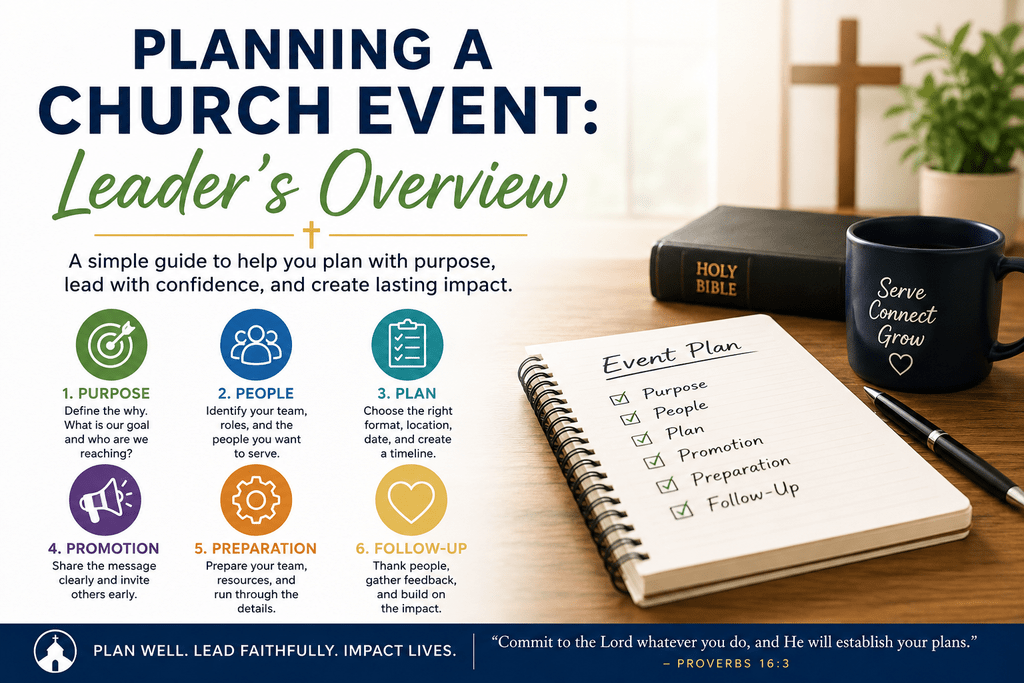
Church events are an important part of our community life – they help us connect, serve, celebrate, and grow together. With many groups, ministries, and new ideas emerging, clear communication and thoughtful planning are essential. This page gives leaders an overview of what to consider when proposing, planning, and running an event, supported by the full Event Planning Checklist attached to this page.
Start With Purpose
- Clarify the goal: What is the event for? Who is it serving? How does it support our mission?
- Identify the audience: Congregation-wide, a specific ministry, families, youth, community members.
- Define expected outcomes: Spiritual growth, fellowship, outreach, fundraising, awareness.
Early Communication
- Notify the Church Council Secretary early if the event requires approval, resources, or publicity.
- Coordinate with other leaders to avoid clashes with existing events.
- Share initial details – date, time, location, purpose – with the Communications Team. This helps ensure your event is published promptly in the Church Calendar and allows planning to begin smoothly. It also provides other leaders with visibility of upcoming events to avoid scheduling conflicts and foster collaboration..
Date, Time & Venue
- Check the church event calendar and contact the Church Office for availability.
- Confirm the venue requirements: hall, worship space, kitchen, outdoor areas.
- Consider accessibility: mobility access, seating, lighting, noise levels.
- Plan for setup and pack?down time and who will handle each.
Roles & Responsibilities
- Nominate an event coordinator as the main point of contact.
- Assign tasks clearly: hospitality, tech, music, setup, safety, communication.
- Ensure volunteers understand expectations and have the support they need.
Risk, Safety & Compliance
- Identify potential risks: physical safety, food handling, child safety, equipment use.
- Follow church policies for Working With Vulnerable People, Safe Church, and incident reporting.
- Prepare contingency plans: weather alternatives, first aid, emergency contacts.
Budget & Resources
- Estimate costs: supplies, catering, printing, equipment.
- Confirm funding source: ministry budget, donations, ticketing.
- Request resources early: tables, chairs, audio visual equipment, kitchen items.
Promotion & Communication
- Submit event details to the Communications Team and the Church Office for publication on the church website, Facebook page, and weekly notices.
- Provide clear information: purpose, audience, date, time, location, contact person.
- Share updates promptly if plans change.
- Ensure messaging matches church tone: welcoming, clear, and community?focused.
Logistics & Operations
- Plan the event flow: arrival, activities, transitions, closing.
- Check technical needs: sound, projection, livestream, lighting.
- Organise catering: dietary needs, food safety, cleanup.
- Prepare materials: handouts, slides, signage, registration lists.
On-the-Day Coordination
- Arrive early to set up and test equipment.
- Brief volunteers on roles and timing.
- Welcome attendees warmly and provide guidance.
- Monitor safety and adjust plans as needed.
After the Event
- Pack down and clean up the space.
- Thank volunteers and participants.
- Evaluate the event: what worked well, what could improve.
- Share outcomes with Church Council if relevant.
Event Planning Checklist
A detailed checklist is available to guide leaders through each stage of planning. Please download and add any additional information required to for your event. Use the checklist alongside this overview to ensure your event is well?prepared, safe, and aligned with our church’s mission.
Need Support?
If you’re unsure where to start or need help with planning, communication, or logistics, please reach out to the Church Council. We’re here to support you as you bring meaningful events to life for our community.
